
What Makes a Candle Truly Clean
Ingredients to Look For and Avoid
Most people don't think twice about what's in a candle. You smell something you love, you buy it, you light it — and that's the end of the thought process. Which is completely understandable. But when you consider that a candle can burn for 40 or 50 hours in an enclosed space, filling the air you breathe with whatever it's made of, the ingredients start to matter a little more.
The good news is that once you know what to look for, it's easy to tell a clean candle from one that isn't.
The wax
The most common candle wax is paraffin, and it's worth knowing what that means. Paraffin is a byproduct of petroleum refining, and when burned, paraffin can release compounds including toluene and benzene, both of which are known toxins. It also tends to produce more soot than plant-based alternatives, which is why paraffin candles often leave dark marks on walls and ceilings over time.
The cleaner alternatives are plant-based waxes — most commonly soy, coconut, or a blend of both. These burn more slowly and evenly than paraffin, produce significantly less soot, and are biodegradable. Coconut wax in particular is considered one of the cleanest and most sustainable options available — it has an excellent scent throw, a smooth finish, and a longer burn time than most alternatives.
What to look for: 100% soy wax, coconut wax, or a coconut-soy blend.
What to avoid: paraffin wax, or any candle that doesn't disclose its wax type.
The fragrance
This is where things get a little more complicated. Fragrance in candles can be derived from natural essential oils, synthetic fragrance compounds, or a blend of both. The issue isn't synthetic fragrance itself — many high-quality synthetic fragrances are perfectly safe — it's the specific compounds used to make them.
Phthalates are a family of chemicals commonly used in synthetic fragrances to help the scent last longer. They're also endocrine disruptors, meaning they can interfere with hormone function in the body. Parabens, similarly used as preservatives in some fragrance compounds, have been linked to hormone disruption as well.
A clean candle will use fragrance oils that are explicitly phthalate-free and paraben-free. Some will also be free from other compounds, including carcinogens — it's worth looking for brands that are transparent about exactly what their fragrances do and don't contain.
What to look for: phthalate-free, paraben-free fragrance oils. Transparency about fragrance ingredients.
What to avoid: candles that list only "fragrance" with no further detail, or that don't address phthalates at all.
The wick
Wick quality is often overlooked but genuinely matters. Candles with metal-core wicks were common for many years — lead wicks were banned in Canada in 2003, but some candles still use wicks with metal cores today.
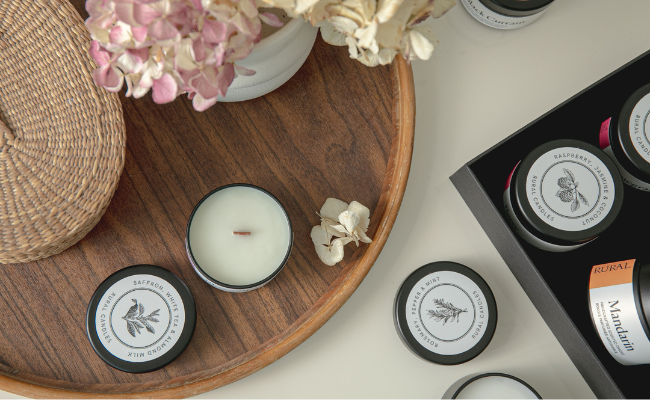
The cleanest option is a pure cotton wick, which burns without releasing any additional compounds. Wood wicks — thin slices of wood that crackle softly as they burn — are another clean and increasingly popular alternative.
What to look for: pure cotton wicks or wood wicks.
What to avoid: wicks with metal cores, or candles that don't disclose their wick type.
Dyes and other additives
The vivid colours in some candles come from synthetic dyes that can release additional compounds when burned. A clean candle is typically undyed — its colour comes from the natural wax itself, which ranges from creamy white to soft ivory depending on the blend.
What to look for: dye-free candles, or candles that use only natural colourants.
What to avoid: brightly coloured candles with no information about the dyes used.
What a truly clean candle looks like
A genuinely clean candle will be transparent about every ingredient it contains. The wax will be plant-based. The fragrance will be free from phthalates, parabens, and other known toxins. The wick will be cotton or wood. And there won't be any synthetic dyes or unnecessary additives.
It won't always be the cheapest candle on the shelf. Clean ingredients cost more than paraffin and synthetic fragrance compounds, and small-batch production costs more than mass manufacturing. But for something you're burning in your home for hours at a time, it's a worthwhile investment — in the air quality of your space, and in the people who make it.